
Patent an Idea?

Can you patent an idea? No.

Many potential inventors say to me “I have an idea I would like to patent” but what they do not understand is that the invention itself is patentable, not the idea. In order for an idea to become a patented invention, the inventor must be able to teach someone of ordinary skill in the art how to make and use the invention.

In 1966 Eugene Wesley "Gene" Roddenberry came up with the “idea” for the transporter. In the Star Trek television series Captain Kirk would use his communication device (which looked a lot like the cell phones of today) from a planet’s surface to order his engineer to “beam me up Scotty.

Could Roddenberry have applied for a patent in 1966 for the cell phone or a transporter? Not unless he could describe to someone skilled in the art how to make and use it.


The law doesn’t even require that you actually make it (“reduction to practice”) you just have to be able to describe how to make and use it. 35 U.S.C. 112 often referred to as the enablement clause reads

“The specification shall contain a written description of the invention, and of the manner and process of making and using it, in such full, clear, concise, and exact terms as to enable any person skilled in the art to which it pertains, or with which it is most nearly connected, to make and use the same…”

§ 112 paragraph 1 requires nothing more than objective enablement. In fact, an inventor can "constructively" reduce an invention to practice, which is unique to patent law.

"The statute does not contain any express requirement that an invention must be reduced to practice before it can be patented. Neither the statutory definition of the term in § 100 nor the basic conditions for obtaining a patent set forth in § 101 make any mention of "reduction to practice.” Pfaff v. Wells Elecs., Inc., 525 U.S. 55, 60-61 (1999).

As Judge Pauline Newman as described, "[t]he inclusion of constructed examples in a patent application is an established method of providing the technical content needed to support the conceived scope of the invention" because "[u]nlike the rules for scientific publications, which require actual performance of every experimental detail, patent law and practice are directed to teaching the invention so that it can be practiced." Hoffmann-LaRoche, Inc. v. Promega Corp., 323 F.3d 1354, 1377 MPEP § 608.01(p).

People often come to me with an idea of how some type of machine might help solve a problem. But when I ask "how do you make it?" they cannot describe the inner workings of the machine. I ask them to tell me how it works and they say "can’t we get someone like an engineer or an electrician to make it work?"  I reply "wouldn’t that engineer be the inventor?"

If we go back to 1969 and the wireless phone idea... just having the idea to transmit voice signal wirelessly wouldn’t be enough to get a patent. You would have to be able to describe it like George Sweigert of Euclid, Ohio did on June 10, 1969. Sweigert  is the man who is credited as the person who came up with the first cordless phone and was awarded US Patent Number 3,449,750 (.PDF). Download the patent to see the way he described how to make and use his invention.

The bottom line is that your new idea of a way to solve a known problem can only be patented if you can describe how to make and use it. You cannot  get a patent on the idea alone. 

The USPTO Has A Facebook Page

The official United States Patent and Trademark Office (USPTO) Facebook page promises to deliver the latest USPTO news, photos and videos.facebook uspto

Through Facebook the USPTO will directly connect with the public and the intellectual property community.

According to David Kappos the USPTO’s Facebook page is meant provide

“a place where users can tell US what YOU think. Users are encouraged to comment on our posts and tell us what you “like” and “dislike” about to the USPTO."

The Invent Blog reported that under Secretary of Commerce for Intellectual Property and Director of the USPTO David Kappos said:

“Technology has profoundly impacted the way we all consume information and communicate with one another... “I’m confident our Facebook presence will complement the USPTO Web site as a means of communicating and connecting with the public and our stakeholders in the intellectual property community.

With more than 400 million people on Facebook, we knew it was an important place for us to be.”

USPTO Director David Kappos welcomes Facebook users with the following message:

Welcome to the USPTO’s page on Facebook! We're excited to be launching this forum to communicate with you and share the latest news from the USPTO. We know thousands of innovators, members of the intellectual property practice community, and USPTO employees are active on Facebook, so we’re pleased to be able to bring information and updates to you here...

Check back here daily, as we will be providing regular updates including press releases and other news, details on upcoming events, speeches, updates from my blog, photos, video, fun facts and more. Just like checking your Facebook page, we hope visiting our page will become part of your daily routine.

The USPTO’s Facebook page is a supplemental page to the official USPTO web page. It makes you think, doesn't everyone need a Facebook page? I enjoy connecting  with over 1000 long lost friends from the good ole days at my  Vincent LoTempio facebook page and I launched a page for my law office at Kloss, Stenger & LoTempio, although  I have to admit there has not been much action there. But I love this social networking. Everyone is getting involved.

Sony Patent Application: Preview of InteractiveTV?

Tweet of the week

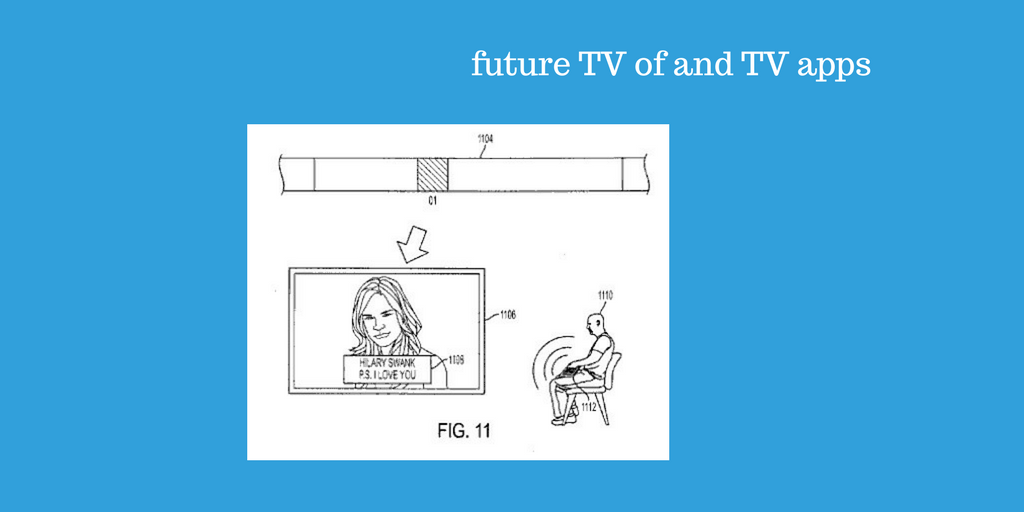
Thanks to Innovator, Consultant, Strategist, Emerging Media, Social TV, Canadian Expatriate Richard Kastelein for tweeting @expathos this week about a Sony patent application that may give us a preview on how viewers could interact with their TVs. What is the future TV of and TV apps?

We all know that one day the computers and TVs will be the same; there will be central location in your house that will control all your entertainment from movies, games, music, internet and the television. But who will bring us there first? Will it be the Sony  'Smart TV'?

Richard Kastelein reported for appmarket.tv that Financial Times (FT) and the google tvUK Times said that Google and Intel are expected to announce Google’s I/O conference on May 19th, in San Francisco a significant breakthrough into consumer electronics and the broadcast industry with the launch of a “Smart TV” platform.

“The technology is allegedly powered by Android and Intel's chips, and will make Sony televisions and even Blu-ray DVD players function like computers, running Google's search, Chrome Web browser, YouTube and other programs.

Kastelein thinks that this smart TV will be a windfall for the App industry, he quoted Julie Jacobson

"...that by 2015, more than half of all TVs shipped worldwide will have a network connection - and seven out of ten of those units will ship with an embedded app platform and app store, according to a new report from Gigaom Pro called, “TV Apps: Evolution from Novelty to Mainstream” (subscription required)."

Janko Roettgers authored an article for newteevee.com "Is This the Sony Smart TV?"  And Paul Johnson of appmarket.tv wrote an article "Google TV - Does Sony patent give us a view on how viewers could interact with their tv's?"  Both are of the opinion that a recent Sony patent applicattion entitled NETWORK MEDIA PLAYER WITH USER-GENERATED PLAYBACK CONTROL(.PDF) may be the basis for the announcement.sony smart tv patent

The patent application essentially describes a network media player able to generate and consume XML-based metadata for programming from any source, including over-the-top, local media and cable TV. This type of metadata would then be stored on a central server and exchanged between users through social networks, or made available by broadcasters or other entities.


Here is a excerpt from the patent application:

It is desirable to provide a mechanism to create, use, and/or share different playbacks of television programs and other sensory works. For example, it is desirable to provide an individual who has recorded the Super Bowl only to watch the commercials with the ability to playback his recording of the Super Bowl on his PVR such that only the commercials are shown. Similarly, an individual who has recorded the Super Bowl only for the football may desire to only see each football play during playback. This [patent application] discusses techniques and systems that may be used to create metadata or the like that controls or varies the playback of a sensory work, such as, a television program.

It also gives a hint as to how big business will profile the American consumer and narrowly direct advertisements at a specific communities. The next step will be to direct ads at a specific household or individual. Talk about "big brother" getting closer to reality. Take a look at this:

In some instances, it may be desirable to insert additional information, video, audio, and the like, during the playback of a sensory work. For example, a user may desire to insert media from another source, from another segment within the same source, or to insert new data. One implementation of this technique would be to insert profile-based advertising during playback. For example, during the playback of the Super Bowl, viewers may be shown advertisements based on demographics or any other information available. Thus, viewers living within one census block group may be shown a Lexus advertisement, while those in another census block group may be shown a Toyota advertisement.

What are you able to afford? The Lexus or the Toyota? So will big business/brother show the Lexus to you or just to your rich brother?

How to Evaluate the Retail Opportunity of a Product

What Inventors Need to Know...

Most independent inventors want to license their invention to a retailer. Usually an inventor does not have the experience nor the money to market, manufacture and distribute a product on their own. So when I ask an inventor if I had a magic wand and instantly gave you a patent, what would you do with it? I get an answer like “I would take it to a large retail chain and work out an exclusive licensing agreement.Man Looking Through Binoculars

Whether they could even get their foot in the door is a long shot in itself, but let’s just say an inventor has a buyer’s ear or is working with a product developer. No matter how good the product is, it will not sell itself.

Are you looking to make a deal? What bargaining power do you have if all you have is the idea? What else can you bring to the table? The more information you have, the better negotiating leverage you have when bartering the licensing royalty rate.

In order for a product developer to properly analyze and evaluate the retail opportunity of a product the following critical points need to be addressed (not listed in any particular order as to importance):

  1.  Wholesale price range
  2.  Suggested retail pricing
  3.  Unit Cost
  4.  Current inventory (number of units on quantity)
  5.  Sales presentation material
  6.  A  good presentation of all of the products benefits and features
  7.  Target market
  8.  Estimate of market size
  9.  Close up image or text version of packaging
  10.  Bar code
  11.  How many fit in store case pack
  12.  Overall product dimensions
  13.  Product weight (single item)
  14.  Intellectual property protection: trademark (brand name) and patent protection
  15.  Current retail stores or on-line retailers carrying product
  16.  Do you have current manufacturing? domestic or international
  17.  Current competing products in the market: sizes and pricing
  18.  Estimated production time for new inventory
  19.  Are there any other variations or a contemplated next generation of the product?

Each side in the negotiation brings certain elements to the table. Every element you can add raises the odds that an agreement will be made. And each element raises the bargaining power to negotiate and profit from any deal.

Buffalo Law Journal Report on Intellectual Property

The Buffalo Law Journal May Special Report focusing on Intellectual Property is now available.

Thanks to Matt Chandler and the staff at Buffalo Law Journal for allowing me to author a guest column in this months issue.Buffalo Law Journal

If you haven't had a chance to check it out, here is a sneak peek at what's inside:

A look at SPLiCE, the Society of Product Licensors Committed to Excellence, through the eyes of itsKimberly Billoni  SPLICE executive director Kimberly Billoni written by David Bertola.

Billoni shares her thoughts on the role her group plays in bringing businesses together.

An overview of the IP practice in WNY by Matt Chandler. Local attorneys say business is strong despite economic concerns. Comments of registered patent attorneys from both large and small firms to get a sense of what they are seeing as well as what the future holds for the practice of IP law.

A guest column by me Vincent LoTempio, looking at an overview of the Patent Reform Act of 2010.

Stepping away from the IP world, Matt Chandler takes a look at what impact recent health care legislation may have on companies considering implementing wellness programs in the workplace.

A spotlight on Lancaster Town Justice Mark Montour who was recognized for his efforts to reach troubled teens battling addiction in Lancaster.

Follow the Buffalo Law Journal on Twitter @BufLawJournal and Facebook.

IP.com Global Patent Search

What Inventors Need to Know...

The "IP.com Global Patent Search"  tool may be your answer if you're looking for a free and easy way to search for prior art patents. The speed of this search engine is amazing. It finds a result almost immediately.

IP.com offers a free search engine box to be integrated into a web site or blog. The search box enables the user to search patents and selected non-patent literature. It takes just seconds to copy and paste the HTML code snippet in an appropriate location on your website, allowing visitors to quickly access patent searching.

Try searching something in the Global Patent Search box below to see how it works!

IP.com Library Search

I tried a few searches myself and was impressed with the database and its ease-of-use. While the USPTO search site makes it difficult to see images and to download patent documents in .PDF format, the IP.com search engine allows you to do both seamlessly.

However there was a point it asked me to type in a CAPTCHA to ensure that my search was not generated by a computer and I was a real person. What a pain in the neck! My eyes aren't what they used to be, but I managed to type it in okay.

Below I pasted a sample of what a search result page looks like. I particularly like the "Options" box, especially its "More Like This" option because it instantly gave a neat organized list of prior art under the following titled headings:

  • US Utility Registered Patents;
  • US Utility Patent Applications; and
  • Prior Art Database English Language Disclosures.

The "More Like This" feature certainly saves time because it allows you to get many similar examples of prior art with one simple click. This is faster than a search on the USPTO  search page where you have to go back and forth from the Patent Application search page to the Registered Patent search page. 

The IP.com search engine provides many other features, like an Advanced Search page that allows the searcher to customize a search to more efficiently find what their looking for. All in all I believe the IP.com Global Patent Search engine is a valuable tool for inventors and patent practitioners alike.

ip.com search result page

Patent Reform Act of 2010: An Overview

Is the United States patent system broken and does it need to be fixed? Can our governmental leaders fix the patent system through legislation? Patent reform legislation has been introduced in each of past three Congresses and has yet to be ratified. Through the current Reform Act it is hoped that better patents are issued, patent rights will be enforced and the flow of technology advances our society for the good of us all. The argument over the many proposed changes appears to be getting closer to a conclusion.

Versions of the bill have been introduced in both the House and Senate (H.R. 1260 in the House, S.515(.PDF) in the Senate). The Senate Judiciary Committee has passed the bill and the House Judiciary Committee has held hearings on it. It will need to pass both committees and both chambers of Congress for it to be sent to the president.

The Obama administration has signaled support for a bipartisan patent reform agreement in the Senate. Senate Judiciary Committee Chairman Patrick Leahy (D-VT) recently came to agreement with Jeff Sessions (R-AL) regarding changes to the Patent Reform Act of 2009 (S. 515), increasing the chance that patent reform will actually happen.

In an April 20, 2010, letter addressed to both Senators Leahy and Sessions, Commerce Secretary Gary Locke pointed out that President Obama supports patent reform and would like to see the bill brought to the floor of the Senate and passed. Here is an excerpt from Locke’s letter:

The Obama Administration strongly supports your efforts to achieve such reforms and is committed to working with members of both houses of Congress to bring these efforts to fruition as you seek to bring a bill to the Senate floor. Regardless of any issues that remain under discussion, there is a consensus that a strong patent system, including an appropriately funded and well-functioning United States Patent and Trademark Office (USPTO), fosters innovation that drives economic growth and creates jobs.

Leahy’s procedural move is called a “hot line,” in which Senate Majority Leader Harry Reid (D-NV) will ask all Senate offices for unanimous consent to proceed to the bill, substitute the new language, and consider it passed.“Hot line” is the term used for a request to Senators to agree to allow a bill or resolution to be considered approved by the Senate without debate. It is has been reported by Dan Friedman of the NationalJournal.com that Senator Leahy is seeking floor time for consideration of S. 515, and hopes it will be taken up by the full Senate prior to Memorial Day.

Some of the proposed changes to current law are outlined below:

  • First Inventor-To-File: The U.S. currently uses a "first-to-invent" system, which seeks to determine which applicant actually invented it first. The proposed reform would grant a priority of a right to the inventor who first-filed a patent application. Currently an inventor has a one-year grace period to file a patent application from the time the invention is used in public, published or offered for sale. This change would eliminate the one-year grace period unless the inventor was the "first-filer."
  • False Marking: The proposed reform would eliminate the right of "any person" to file a false marking claim. Claims would be limited to individuals who have "suffered a competitive injury." This change would apply to apply to all cases, without exception, pending on or after the date of the enactment of this Act.
  • Damages: The Patent Reform Act of 2010 attempts to address allegations that awards in patent cases are at times unfair and inconsistent. The Act proposes that courts be required to "identify the methodologies and factors that are relevant to the determination of damages, and the court or jury shall consider only those methodologies and factors relevant to making such determination." In other words, juries will only be allowed to award damages if the contentions are supported by substantial evidence. Each party would be required to "state, in writing and with particularity, the methodologies and factors the parties propose for instruction to the jury in determining damages … specifying the relevant underlying legal and factual bases for their assertions." This approach looks to strike a balance between the rights of patentees and accused infringers. However, as this approach does not actually limit damage awards, it remains to be seen how much this will affect a jury’s determination of damages.
  • Trial: Right to split trial into segments: damages; infringement; validity; and willfulness.
  • Willful Infringement: Under the current law, if it is determined that an accused infringer willfully infringed on another’s patent, "the court may increase the damages up to three times the amount found or assessed" (see S. 515 – Patent Reform Act 2009). Understandably, willful infringement was asserted in a majority of cases, and was found in many of them. This led to a number of unforeseen consequences. For instance, since one defense to willful infringement is reliance on an opinion from a patent attorney that there was no infringement, a number of lawyers were charging outrageous amounts (in excess of $100,000) for these opinions. In other cases, it was found that some businesses deliberately avoided learning about patents in order to avoid willful infringement claims. This completely goes against the whole purpose of the patent system, which is to promote science and useful arts. As a result, the Patent Reform Act of 2010 attempts to fix the willful infringement doctrine by increasing the standard for finding it. The 2010 Act proposes that, in order to be found “willful,” you must be found to be “objectively reckless” by clear and convincing evidence. It would also be made clear in the statute that knowledge alone is not enough to establish willfulness, and that any close cases should ere against a willfulness finding. This approach strikes a nice balance by making it much more difficult to assert willful infringement without getting rid of the doctrine all together.
  • Pre-Issuance Submissions of Prior Art by Third Parties: The statute would expand the time frame for third-party submissions and allow third-parties to submit references and a statement regarding the relevance of the reference to patentability during examination of a patent application. This provision will benefit the public, the Patent Office, and inventors by giving the public additional time and the ability to make arguments to the Office; the Office more thoroughly examines an application in the first instance thereby decreasing potential reexamination proceedings; and the inventor is granted a patent which has been more thoroughly examined thereby decreasing the likelihood that the patent will later be invalidated through a novelty/nonobviousness argument.
  • Litigation Venue: Patent cases could be transferred for the convenience of the parties to venues clearly more convenient than the venue in which the civil action is pending.
  • Federal Circuit Judicial Residency:  Federal Circuit Judges would no longer be required to live in the Washington, DC area.
  • Micro-Entity: A new type of entity defined as a "micro entity" for an inventor that has not been named on 5 or more previously filed patent applications would qualify for reduced fees.
  • Best Mode Requirement: The Best Mode requirement would no longer be an invalidity defense and it cannot serve as a basis for holding a patent unenforceable. If the bill is made into law it will result in: Patents that do not teach the best way to make the invention, but teach “a way” to make the invention; this change favors the inventor over the infringer because it will make it harder to invalidate a patent.
  • Inequitable Conduct: Currently, when applying for a patent, the patentee is required to supply to the Patent Office any information deemed relevant to the invention’s patentability. If you intentionally mislead the Patent Office at this time, you are guilty of inequitable conduct, and the penalty is unenforceability of your patent. While that appears to be fair, it turns out that because of the penalty at stake, inequitable conduct is alleged in almost every major patent case. As a result, the Patent Reform Act of 2010 proposes to allow patent owners to request “supplemental examination” prior to litigation. During this time, the patent owner could submit relevant information to the Patent Office for consideration. Any patentee surviving this reexamination would be exempt from an allegation of inequitable conduct based on the initial examination process. However, a big question mark is the ability of the Patent Office to handle the changes created by this proposed law, including processing a host of new reexamination proceedings. With 750,000+ applications sitting in its backlog, can the USPTO afford to devote manpower to this?

The Patent Reform Act of 2010 appears to balance the playing field for patentees in defending their patents.In the long run, the pressures of market competition will determine the fate of the patent system based on its performance. If the patent system fails, over time it will make the United States economically less competitive, and industry will demand change.

Continue Reading...