
New Apple Patent Application: Generating a Book

Tweet of the week

Thanks to @ifones for tweeting this week about how Apple may take on a new role in video gaming if its latest patent application, published by the U.S. Patent and Trademark Office last week, ever makes it into a product.

Take a look how Patently Apple breaks down the Apple patent application that teaches new methods to convert a computer user's video game play into a "book, e-book, or comic book."

Apple Apps

Sony Patent Application: Preview of InteractiveTV?

Tweet of the week

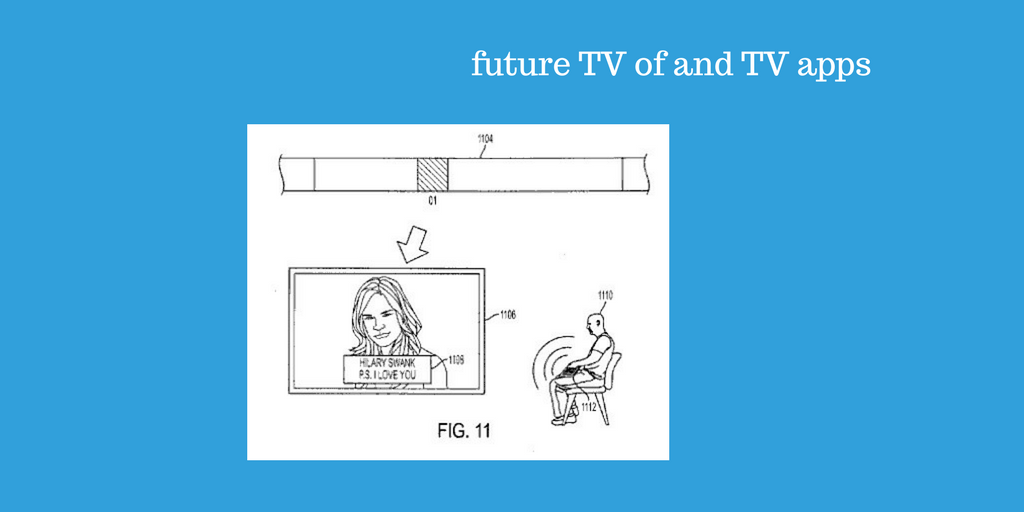
Thanks to Innovator, Consultant, Strategist, Emerging Media, Social TV, Canadian Expatriate Richard Kastelein for tweeting @expathos this week about a Sony patent application that may give us a preview on how viewers could interact with their TVs. What is the future TV of and TV apps?

We all know that one day the computers and TVs will be the same; there will be central location in your house that will control all your entertainment from movies, games, music, internet and the television. But who will bring us there first? Will it be the Sony  'Smart TV'?

Richard Kastelein reported for appmarket.tv that Financial Times (FT) and the google tvUK Times said that Google and Intel are expected to announce Google’s I/O conference on May 19th, in San Francisco a significant breakthrough into consumer electronics and the broadcast industry with the launch of a “Smart TV” platform.

“The technology is allegedly powered by Android and Intel's chips, and will make Sony televisions and even Blu-ray DVD players function like computers, running Google's search, Chrome Web browser, YouTube and other programs.

Kastelein thinks that this smart TV will be a windfall for the App industry, he quoted Julie Jacobson

"...that by 2015, more than half of all TVs shipped worldwide will have a network connection - and seven out of ten of those units will ship with an embedded app platform and app store, according to a new report from Gigaom Pro called, “TV Apps: Evolution from Novelty to Mainstream” (subscription required)."

Janko Roettgers authored an article for newteevee.com "Is This the Sony Smart TV?"  And Paul Johnson of appmarket.tv wrote an article "Google TV - Does Sony patent give us a view on how viewers could interact with their tv's?"  Both are of the opinion that a recent Sony patent applicattion entitled NETWORK MEDIA PLAYER WITH USER-GENERATED PLAYBACK CONTROL(.PDF) may be the basis for the announcement.sony smart tv patent

The patent application essentially describes a network media player able to generate and consume XML-based metadata for programming from any source, including over-the-top, local media and cable TV. This type of metadata would then be stored on a central server and exchanged between users through social networks, or made available by broadcasters or other entities.


Here is a excerpt from the patent application:

It is desirable to provide a mechanism to create, use, and/or share different playbacks of television programs and other sensory works. For example, it is desirable to provide an individual who has recorded the Super Bowl only to watch the commercials with the ability to playback his recording of the Super Bowl on his PVR such that only the commercials are shown. Similarly, an individual who has recorded the Super Bowl only for the football may desire to only see each football play during playback. This [patent application] discusses techniques and systems that may be used to create metadata or the like that controls or varies the playback of a sensory work, such as, a television program.

It also gives a hint as to how big business will profile the American consumer and narrowly direct advertisements at a specific communities. The next step will be to direct ads at a specific household or individual. Talk about "big brother" getting closer to reality. Take a look at this:

In some instances, it may be desirable to insert additional information, video, audio, and the like, during the playback of a sensory work. For example, a user may desire to insert media from another source, from another segment within the same source, or to insert new data. One implementation of this technique would be to insert profile-based advertising during playback. For example, during the playback of the Super Bowl, viewers may be shown advertisements based on demographics or any other information available. Thus, viewers living within one census block group may be shown a Lexus advertisement, while those in another census block group may be shown a Toyota advertisement.

What are you able to afford? The Lexus or the Toyota? So will big business/brother show the Lexus to you or just to your rich brother?

What Executives Make of Innovation

Tweet of the week

Thanks to @StrongerAmerica for tweeting this week about the importance of making innovation a top priority in corporate America.

James Andrew, senior partner and head of the global innovation practice at Boston Consulting Group, authors this article for Business Week.

The difference between a company whose CEO and leadership team have an "all-in" mentality regarding innovation, and one whose leadership supports innovation merely at an abstract level, is unmistakable—and so is the impact on the company's culture and results.

stronger America

Film Piracy: Teach Children to Respect IP

Tweet of the week

Thanks to Peter Black @PeterBlackQUT for tweeting this week about the importance of teaching children to respect the intellectual property rights of others.

Ben Child, Guardian film writer and blogger wrote that Lord David Puttnam the president of the Film Distributors' Association voiced his concern of the need for new methods to stop  copyright infringement of films through internet piracy.

In a recent keynote speech as president of the FDA Puttnam said that:

"young people needed to be educated at an early age that it was wrong to illegally download copyrighted material"...."The concept of intellectual property and its value needs to be embedded inextricably into the school curriculum."


Apple is the number one target for NPEs in the US

Tweet of the week

Thanks to @ipgossip for tweeting this week about Apple being the number one target for NPEs in the US. Joff Wild of IAM Magazine commented that,

"Apple must have spent well over $200 million on dealing with NPEs over the last few years and I imagine a few others can match that as well. No wonder so many companies hate NPEs and call them trolls."

According to a statement(.PDF) given by Teresa Stanek Rea,  then President of the American Intellectual Property Law Association, to The Subcommittee on Courts and Competition Policy Committee on the Judiciary for the United States House Of Representatives

AIPLA conducts a nationwide survey of our members every two years on the cost of patent litigation. In 2007, we reported that the median cost of a patent infringement suit was $1,600,000, if $1 million to $25 million was at risk. The cost rises significantly as the stakes increase. The median average cost of a patent infringement case involving more than $25 million dollars was about $5,500,000.

Green Patent Fast Track

Tweet of the week

Thanks to @Patent Wire for tweeting about the new pilot program where the first 3,000 applications related to green technologies will be examined by the USPTO on an accelerated basis. Go green!

twitter screen

President Obama tells the banks, "show me the money"

Tweet of the week

Thanks to @BarackObama for tweeting this week about a fee that would recover every penny loaned to Wall Street during the financial crisis and stop the reckless abuses that nearly caused the collapse of our financial system.

Do you think the American people will ever see any of that money again? I think the big financial firms are going to push through the massive bonuses. We'll see.

obama tweet

Tweet of the week @ipwatchdog

Thanks to @ipwatchdog for tweeting this week about the pitfalls of inventors representing themselves and the USPTO effectively advancing "submarine patents" through Patent Office delay.

"Inventors who represent themselves always wind up with rights more narrow than they should."


@ipwatchdog makes two points I would like to comment on:

First, when the USPTO causes long delays for an unpublished patent application, it essentially creates a "submarine patent."  The problem with "submarine patents" is that when issued, it forces companies already using the newly patented technology to pay retroactive licensing or rights fees. US Patent No. 7,631,368, was a pending application out of the public eye for about five years before it issued.

The second point is that the patent claim is so darn long and  "narrow" because it has so many elements, it would be almost impossible for anyone to infringe upon it. Therefore making it not only a "submarine patent" but a "wallpaper patent" as well,  essentially having no value. The only thing it is good for is to  hang it on the wall. The submarine was sunk by the heavy load of elements in the claim.

Inventors should know...

The lesson here is, make sure you are represented by a registered patent attorney or agent that knows how to draft broad claims.

Tweet of the Week @ipdotcom

Thanks to @ipdotcom  for tweeting this week about the Internet's birthday.

And linking from thier Twitter stream @ipdotcom to this very interesting YouTube video giving us an insight of Internet pioneer and UCLA computer science professor Leonard Kleinrock about the meager beginnings of the Internet.