
The Process of Writing and Publishing a Book

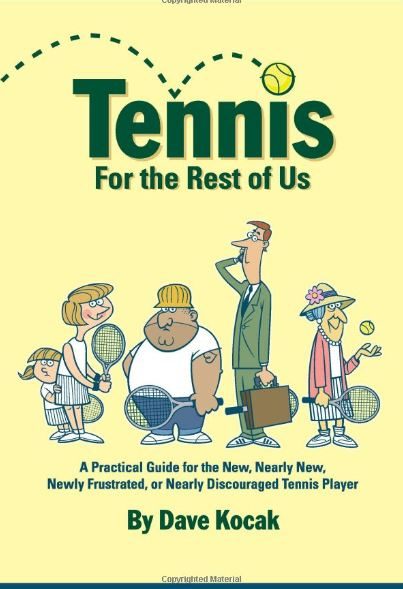
As a Buffalo patent attorney I often get asked questions from would-be authors about publishing and copyright. Dave Kocak tennis pro at the Miller Tennis Center wrote a book called "Tennis for the Rest of Us" and I asked him to share some of his thoughts about the process of writing and publishing a book.

Here is what Dave Kocak had to say:

I've been a tennis pro for about 30 years. I've taught in many venues, resorts, private clubs, country clubs and public clubs. I've worked with nationally ranked juniors, beginning juniors and adults at all levels.dave kocak

While I've enjoyed teaching them all my favorite groups are beginning and lower level adults. Over 30 years I think I've learned a lot about how to teach adults and I have tried to narrow down the essentials to rapidly becoming the best tennis player you can be.

Believe me when I say "rapidly" I only mean as fast as you can. Unfortunately, there is usually nothing rapid about it.

Most books on tennis tend to be focused on young players with an eye to them becoming outstanding players competing at a high level.

The difference between that individual and a 40 year old woman who has never played a sport in her life is huge. I think those books set up someone like that to fail by creating unrealistic expectations or overwhelming them with information.

I had never seen a book designed for beginners covering all aspects of the game.

My book gives them the essentials of proper technique, simple advice on equipment, leagues, clubs, strategy, advice on selecting pros, getting your kids involved and some of the things to be avoided.

While I think I covered just about everything, I did it in 140 (my readers say humorous, easy to read pages) and not some manual that no one ever reads.

I knew exactly the book I wanted to write because I knew my audience so well. I thought I could self-publish without too much expense and I was right. Going through a conventional publisher seemed either overwhelming (no one likes rejection) or too time consuming.

I'd waited 30 years to write, I wanted to get it out there NOW! There are lots of sites that can help you self-publish, from cover preparation to editing to promoting.

10 Tips About the Process of Writing a Book:

  1. You can do it. If I can, anyone can. I took all of the pictures in my book with a cheap digital camera and I've never owned a camera in my life. I've never written anything longer than two typed pages before either.
  2. If you tell everyone you are writing a book, pretty soon you have to actually write it.
  3. Don't be afraid to let other people read it (not the spouse). Your friends won't want to hurt your feelings but that doesn't mean they won't give you some honest criticism. Listen to their advice, but remember it is your book.
  4. If you do not have pictures that are important to the book, Print-on-demand is the only way to go. At least in the beginning, and at least for your first book. You can get as many copies as you like for a few dollars apiece for your own sales and Amazon and Barnes & Noble will carry it online with a very attractive royalty structure.
  5. I got 1,000 copies printed because it wasn't much more than getting 500. The difference is that I have an extra 10 boxes of books in my attic attesting to the fact that I don't know how to market. Keep that in mind.
  6. My layout was done by a university student who worked on the school magazine and my proofreading was done by a college business writing teacher. Both were excellent but even college kids are kids.
  7. If you are writing fiction a lot of this may not apply. I don't know anything about writing fiction.
  8. Don't write it if you are not passionate about it. Even then, it's work. second book doesn't have the same internal imperative that the first one had (I HAD to write that one) and consequently is going a little slower.
  9. To get a book on Amazon or anywhere else you need an ISBN number. The one or two main companies that handle them sell them in groups of 10 (everyone is likely to write 10 books?) for about $250. You can get individual ones for less than $100. check out the self-publishing sites. There are many that sell them now.
  10. An excellent guide to getting self-published is the "The self publishing manual" by Dan Poynter.

Orange Crush Trademark Infringement

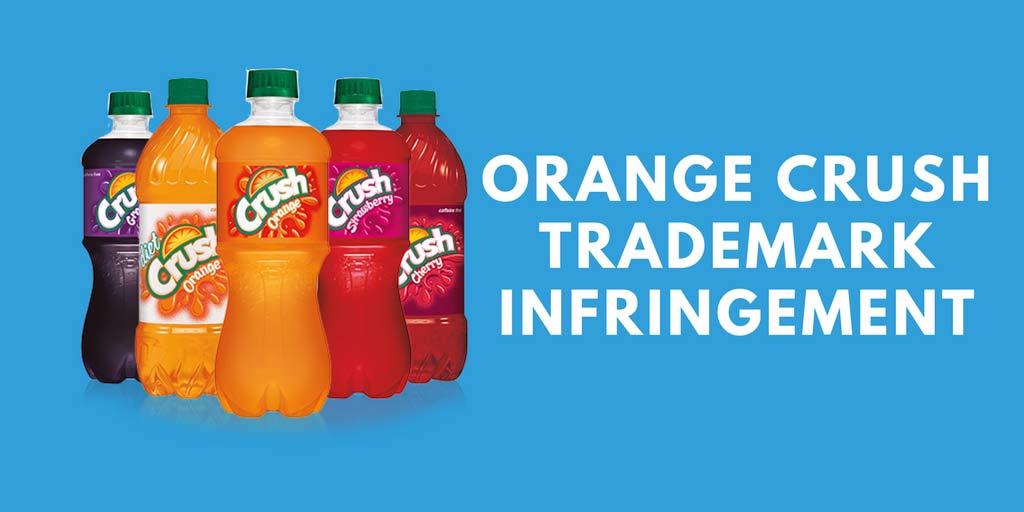
A synthetic cannabis called Cush produced by "Sky Hi Blends" in Arizona is now sold at some delis and convenience stores in Buffalo, New York.  Buffalo city officials want it off the shelves.

The Dr. Pepper Snapple Group own Orange Crush and think it is trademark infringement. They demand that the name and logo is removed from the labels of the Cannabis product.

"Needless to say, we had nothing to do with this product. We did not authorize the marketing and sale of it. We're angry that our trademark is being infringed and associated with a product like this and we're pursuing all legal alternatives to get it off the streets," said Chris Barnes, spokesman for Dr. Pepper Snapple Group.

Ryan Burgess of  YNN News reported this story and as a buffalo attorney  that practices IP law I appear in this video clip to provide general information regarding trademark infringement.

I was quoted as saying "The question is whether it's going to confuse the public.Orange Krush Confusingly similar marks. It doesn't have to be the exact same thing.

It could be a phonetic equivalent, something close. And if it's close enough to confuse the public, then it's going to be an infringement of the trademark" 

I also found on line a product called Orange Krush. The product is advertised as a "a hybrid all natural bud smoke that grows wild in the peruvian jungles and several tropical islands."

I wonder what the Dr. Pepper Snapple Group thinks about the label on Orange Krush buds? Do you think the drops of orange liquid around the letters are "confusingly similar" to the Orange Crush trademark? Does changing the "C" to a "K" make a difference when infringement questions are raised?

An interesting side note to this story:

I performed a search on the United States Patent and Trademark Office search page I noticed that the trademarks registrations for Orange Crush are listed as DEAD. They have one pending application 85218189 for registration that is live. The registration 3721289 that is live is owned by Starbuzz Tobacco, Inc for tobacco products.orange crush trademark

I am curious as to why they did not maintain their trademarks in Orange Crush. And I wonder how hard Sky Hi Blends is willing to push on fact that the registrations expired. If registrations expire there still are common law rights but the benefits of registration are lost.

Here are some of the benefits of owning a federal trademark registration on the Principal Register registration:

  • Public notice of your claim of ownership of the mark;
  • A legal presumption of your ownership of the mark and your exclusive right to use the mark nationwide on or in connection with the goods/services listed in the registration;
  • The ability to bring an action concerning the mark in federal court;
  • The use of the U.S. registration as a basis to obtain registration in foreign countries;
  • The ability to record the U.S. registration with the U.S. Customs and Border Protection (CBP) Service to prevent importation of infringing foreign goods;
  • The right to use the federal registration symbol ®; and
  • Listing in the United States Patent and Trademark Office’s online databases.

Inventions of Steve Jobs Define Us

Steve Jobs revolutionized our world through his inventions. There are very few inventors in the world that give us devices that change the way we live. There are not many households in the world that don't have some form of technology created by Apple. Steve Jobs

My house is littered with almost every generation of iPod, the iPad I and II, Apple TV and a couple laptops made by Apple. I remember my first computer was a Mac in the early 1980s.

Steve Jobs co-founder of Apple passed away at the young age of 56. It makes me consider my mortality. You can have everything in the world but you can't control your time here.

We all live on the edge of life and death every minute but no one ever considers that death is going to take them away right now. So I try to remind myself to live my life now.

Inventors attempt to come up with ideas to change the world but there are very few people that actually do it.

Steve jobs and Apple revolutionized our world through the electronic devices he and his company invented.

The personal computer. In 1976 the Apple I was one of the firapple iist rudimentary computers made available for computer enthusiasts at the cost of $666.66.

Throughout the next 40 years the Apple personal computer evolved to a point where everyone could interact with the computer in our own language in a seamless iconic way.ipod


The iPod forever changed the way we listen to music. It's iconic commercials of a young person listening to music with the earphone buds and long wire swinging to the music changed the music industry.

The iPad forever changed the way we interact with apps and the endless store of information on the Internet.

ipadI would guess this is just the precursor of screens attached to walls and other devices that we swipe and tap with our fingers to manipulate the electronic images and music and remote control of virtually all electronic devices.iphone


The iPhone the most popular smart phone in the world forever changed the way we communicate with each other. 

Steve Jobs has been compared to Edison, da Vinci and all the great inventors of all time and I agree he certainly deserves to go down in history as an iconic figure that changed the world forever.

Inventors Hall of Fame: Wilson Greatbatch

Wilson Greatbatch was an inventor from Buffalo who I met twice in my life. As a Buffalo, New York patent attorney I am a member of the Niagara Frontier Intellectual Property Law Association (NFIPLA) and he was an attendee at the annual dinner which honors the inventor of the year. He was the first person honored with the award and he attended many of the annual  NFIPLA Awards Dinners.

At the award dinner they also award the prize for the best idea from the local grammar schools. I remember a young girl won the award and Wilson Greatbatch let her wear the medal that he received from the Inventors Hall of Fame throughout the evening.

The second time I met him was at a laboratory he created in an old barn in Clarence, New York. I forget who invited me there, but he spoke about the many experiments he was conducting and how he was attempting to come up with new ways to make our world a better place. 


There was a formal presentation in which he discussed ways he envisioned harvesting helium-3 found on the moon and using it as the basis of generating nuclear-power through fusion to propel a rocket to Mars or use it as a clean source of energy on earth to replace fossil fuels.

Throughout his life and up until his death he wanted to create and come up with new ways of doing things to help humanity. I'm glad I've had the opportunity to meet such a great man and I was greatly saddened to hear of his death last week.

Wilson Greatbatch
Born Sep 6, 1919 died September 27, 2011

Medical Cardiac Pacemaker
Implantable Pacemaker
Patent Number 3,057,356 (PDF)

Inducted into the National Inventors Hall of Fame in 1986.

Wilson Greatbatch received more than 350 national and international patents including one for inventing the cardiac pacemaker, an innovation selected in 1983 by the National Society of Professional Engineers as one of the two major engineering contributions to society during the previous 50 years.

The pacemaker invention is an example of Louis Pasteur’s reflection that “chance favors the prepared mind.” While at the University at Buffalo, New York state, in 1956, Greatbatch accidentally fitted a device for recording heart rhythms with the wrong resistor which resulted in a device which created intermittent electrical impulses.

He was looking for a way to build a device small enough to produce electrical stimulation that could compensate for a failing heart and this was the beginning of the long history of discovering and ever improving the implantable pacemaker. The American Heart Association reports that more 500,000 pacemakers are implanted every year.

"I stared at the thing in disbelief and then realized that this was exactly what was needed to drive a heart," he wrote in his 2000 memoir "The Making of the Pacemaker."

Greatbatch has established a series of companies to manufacture or license his inventions, including Greatbatch Enterprises, which produces most of the world's pacemaker batteries.

"Nine things out of 10 won't work, The 10th will pay for the other nine."

                                                                                 Wilson Greatbatch

Invention Impact

His original pacemaker patent resulted in the first practicable implantable cardiac pacemaker, which has led to heart patient survival rates comparable to that of a healthy population of similar age. Implantable cardiac pacemaker have saved and improved countless lives.

Inventor Bio

Born in Buffalo, New York, Greatbatch received his preliminary education at public schools in West Seneca, New York. In 1936 he entered military service and served in the Atlantic and Pacific theaters during World War II. He was honorably discharged with the rating of aviation chief radioman in 1945.

He attended Cornell University and graduated with a B.E.E. in electrical engineering in 1950.

Greatbatch received a master's from the State University of New York at Buffalo in 1957 after which he became manager of the electronics division of the Taber Instrument Corporation in Buffalo. Because Taber was unwilling to take on the risk of his pacemaker implant experiments, he began his life as an independent inventor and entrepreneur. He started with a mere $2000 and work independently out of his family home with his wife and children in Clarence, New York. Greatbatch died a wealthy man but at this time he needed to grow his own food to support his family.

He was awarded an honorary doctor's degrees from Houghton College in 1970 and State University of New York at Buffalo in 1984.

In 1979 was awarded the "Dean's Award for Engineering Achievement" at the State University of New York at Buffalo (UB) School of Engineering and Applied Sciences.

Although trained as an electrical engineer, Greatbatch primarily studied interdisciplinary areas combining engineering with medical electronics, agricultural genetics, the electrochemistry of pacemaker batteries, and the electrochemical polarization of physiological electrodes.

In 1996, at age 76, he received a lifetime achievement award from the Lemelson-MIT Prize board.

Posted with the permission of the  National Inventors Hall of Fame