
USPTO Sends Bilski Memo to Patent Examiners

usptoAlmost immediately after the Supreme Court handed down the Bilski decision Robert W. Bahr, Acting Associate Commissioner for Patent Examination Policy sent a memorandum to the patent examining corps which gave guidance as to how the USTPO examiners should interpret the case.

Bahr told examiners to examine patent applications for compliance with section 101 using the machine-or-transformation test as a tool for determining whether the claimed invention is a process under section 101.

If a claimed method meets the machine-or-transformation test, the method is likely patent-eligible under section 101 unless there is a clear indication that the method is directed to an abstract idea.

Bahr summarized what the Supreme court decided in the short memo:

The Supreme Court confirms section 101 specifies four independent categories of inventions and discoveries that are eligible for protection: process, machines, manufacturers, and compositions of matter.

The Supreme Court confirms that laws of nature, physical phenomenon and abstract ideas are not patentable subject matter.

The Supreme Court decided claims of Bilski not patent-eligible because under section 101 because they are an attempt to patent abstract ideas.

The Supreme Court indicated machine for transformation test is only a threshold inquiry and is not the sole test for patent eligibility of processes under 35 USC 101.

Significantly, the Supreme Court also indicated that a business method is at least in some circumstances eligible for patent under section 101.

Bahr concluded by saying an examiner should continue to examine patent applications for compliance with section 101 using "existing guidance" concerning the machine-or-transformation test.

I tried to figure out what the existing guidelines are for the USPTO regarding the examination of a process claim. I found another memorandum dated January 7, 2009, by John J. Love, Deputy Commissioner for Patent Examination Policy, addressed to the Technology Center Directors and the Patent Examining Corps which explained that the Bilski machine-or-transformation test for a method claim is whether or not the claimed method is:

  1. Tied to a particular machine or apparatus; or
  2. Transforms a particular article to a different state or thing.

The "guidelines" go on to say that there are two corollaries to the machine-or-transformation test :

  • First, a mere field of use limitation is generally insufficient to render otherwise eligible method claim patentable. This means the machine or transformation test must impose and meaningful limits on the method claim scope to pass the test; and
  • Second, insignificant extra-solution activity will not transform an unpatentable principle into a credible process. This means for citing a specific machine work or a transformation of a specific article is an insignificant step, such a data gathering or outputting, is not sufficient to pass the test.

Other related posts:

Senator Leahy Uses Bilski to Push Patent Reform

Bilski vs. Kappos Decision

Bilski vs Kappos

Legal community weighs in on Bilski v. Kappos

Business method patents...what will the Supreme Court Do?

Bilski vs. Kappos Decision

To summarize today's Supreme Court ruling in Bilski (PDF), business method patents remain viable supreme courtsubject matter and the machine-or-transformation test enunciated as the sole test by the Federal Circuit is not the exclusive test, but merely one tool in the Examiner toolbox.

The court affirmed that Bilski’s risk-management method was not patentable subject matter. "Indeed, all members of the Court agree that the patent application at issue here falls out-side of §101 because it claims an abstract idea."

You can not patent laws of nature, physical phenomena, and abstract ideas.

Indeed, Justice Kennedy writing for the Court found that 35 U.S.C. §273 acknowledges the existence and statutory protection of business method patents.

Adopting the machine-or-transformation test as the sole test for what constitutes a “process” (as opposed to just an important and useful clue) violates these statutory interpretation principles. Section 100(b) provides that “[t]he term ‘process’ means process, art or method, and includes a new use of a known process, machine, manufacture, composition of matter, or material.”

"The Court is unaware of any “‘ordinary, contemporary, common meaning...of the definitional terms “process, art or method” that would require these terms to be tied to a machine or to transform an article..., under the doctrine of noscitur a sociis."

The Court found that the invention in Bilkski, is an attempt to patent an abstract idea as well as a mathematical formula to express that idea. The Court reasoned that this was not patentable subject matter under 35 U.S.C. §101.

In his concurring opinion, which was joined by Justices Gindburg, Breyer, Sotomayor and Stevens, Kennedy agreed with the majority that Bilski revolved around the attempt to patent an abstract idea and therefore ran afoul of §101.

Nevertheless, Stevens (and the concurring justices) would have taken this decision further by reiterating their position that business method “patents” are not patent-eligible subject matter in the first place.John Del Vecchio

I asked patent attorney John Del Vecchio of the Buffalo patent law firm of  Del Vecchio and Stadler about his thoughts regarding this much anticipated Supreme Court Decision, he highlighted the following quotes from the Biliski opinion (PDF):

Page 8
This Court’s precedents establish that the machine-or- transformation test is a useful and important clue, an investigative tool, for determining whether some claimed inventions are processes under §101. The machine-or- transformation test is not the sole test for deciding whether an invention is a patent-eligible “process.”

Page 9
As a result, in deciding whether previously unforeseen inventions qualify as patentable “process[es],” it may not make sense to require courts to confine themselves to asking the questions posed by the machine- or-transformation test. Section 101’s terms suggest that new technologies may call for new inquiries.

Page 10
Section 101 similarly precludes the broad contention that the term “process” categorically excludes business methods.

Page 12
But beyond this or some other limitation consistent with the statutory text, the Patent Act leaves open the possibility that there are at least some processes that can be fairly described as business methods that are within patentable subject matter under §101.

Page 13
Petitioners’ claims are not patentable processes because they are attempts to patent abstract ideas.

Page 16
In disapproving an exclusive machine-or-transformation test, we by no means foreclose the Federal Circuit’s development of other limiting criteria that further the purposes of the Patent Act.

Del Vecchio concludes, "So, it looks like the machine/ transformation test is a great clue, but not the sole test under 101. And, it looks like business method patents are alive and well.

Too bad the Court failed to spell out what the other 101 clues are!!!  Seems like we might be back to the machine/transformation test as the only sure way of satisfying 101."

Based on today’s ruling and the concurring opinion of Justice Stevens, it will be interesting to see whether the Supreme Court will further define patent eligible subject matter and grant certiorari (PDF) in Mayo v. Prometheus (PDF) a case challenging the patentable subject matter of Prometheus Labs' patents that cover a method of optimizing the dosing of a drug.

Other related posts:

Senator Leahy Uses Bilski to Push Patent Reform

USPTO Sends Bilski Memo to Patent Examiners

Bilski vs Kappos

Legal community weighs in on Bilski v. Kappos

Business method patents...what will the Supreme Court Do?

Rights Protected in Trademark Registration

How does a trademark benefit your company? Every one knows the value of a name. I wonder what trademark symbol circle Rthe value of the Nike name and swoosh design is versus all the inventory and assets the company owns. I would guess the name has more value.

But what are the benefits of registering the trademark? Here is a list of benefits of owning a  Federally registered trademark in the United States:

  1. Registration is proof of validity;
  2. Proof of registrant's ownership of the trademark;
  3. Exclusive right to use the trademark in commerce;
  4. "Incontestability" after five (5) years registration (stops attacks based on prior use or descriptiveness of the trademark);
  5. Constructive notice nationwide of the trademark owner's claim;
  6. Nationwide rights in the trademark (trademark rights can be obtained by registering it in an individual state);
  7. Right to bring suit in federal court regardless of jurisdictional diversity;
  8. Registration rights under the Paris Convention can be used as a basis for obtaining registration in foreign countries;
  9. Registration may be filed with U.S. Customs Service to prevent importation of infringing foreign goods; and
  10. Allows you to use the trademark R with a circle around it symbol. ®

Bilski vs Kappos

What's taking the Supreme Court so long to hand down an opinion on thesupreme court Bilski vs Kappos case? Bilski was argued on Nov. 9, 2009... 225 days ago. There has been much speculation that the decision will be published when the Supreme Court next releases its opinions on Thursday (June 24, 2010) or next Monday.

Dennis Crouch's Patently-O blog posts a nice chart of Joseph Miller, a professor at Lewis & Clark Law School, which shows the length of time it took the Supreme Court to render decisions on 20 other patent cases. The range was between 35 and 153 days. Dennis Crouch concludes:

"If you feel like you've been waiting a long time to see the Bilski opinion, it's because you have been waiting a longer time than usual."

My first thought was how can you compare Bilski, a case that's going to have long reaching consequences to many existing patents and software companies futures, with any other patent case? Wouldn't you expect it to be longer than the rest?

But a quick glance at the list and I saw a couple of the seminal cases in patent law history and a big one is right there at 140 days- Festo Corp. v. Shoketsu Kinzoku Kogyo Kabushiki Co., Ltd., a case that was pending for almost twenty years and a case the Supreme Court looked at twice regarding the scope of prosecution history estoppel under the doctrine of equivalents.

The questions presented to the supreme Court in Bilski were:

  1. Whether the Federal Circuit erred by holding that a "process" must be tied to a particular machine or apparatus, or transform a particular article into a different state or thing ("machine-or-transformation" test), to be eligible for patenting under 35 U.S.C. § 101, despite this Court's precedent declining to limit the broad statutory grant of patent eligibility for "any" new and useful process beyond excluding patents for "laws of nature, physical phenomena, and abstract ideas."
  2. Whether the Federal Circuit's "machine-or-transformation" test for patent eligibility, which effectively forecloses meaningful patent protection to many business methods, contradicts the clear Congressional intent that patents protect "method[s] of doing or conducting business." 35 U.S.C. § 273.

The Bilski decision may affect whether any business method, software, e-commerce and/or medical diagnostic technology is patentable. It will be interesting to see what and when they decide this case. Stay tuned for my next post on the Bilski decision.

Other related posts:

Senator Leahy Uses Bilski to Push Patent Reform

USPTO Sends Bilski Memo to Patent Examiners

Bilski vs Kappos Decision

Legal community weighs in on Bilski v. Kappos

Business method patents...what will the Supreme Court Do?

Building Brand Recognition thru Trademark

What Inventors Need to Know...

Tom Demitry is an entrepreneur, an inventor, a salesman, a marketer, a man of ideas and as he will tell you first and foremost a father and a man of God. He is constantly coming up with new ideas and new ways to reinvent himself. His passion and enthusiasm are endless.

I met Tom about 10 years ago when I first became a patent attorney and he was looking for someone to help him file a patent application and get a patent for spiritdomeshis invention, the PaintMat (PDF). Little did he know that he was my first client! It was the beginning of a long term working relationship and friendship.

Although that product never really became a financial success, Tom took the PaintMat idea across the country selling the product he had patented, manufactured and marketed and learned a lot of lessons in the process.

Since then he started a new endeavor selling baseball caps and various styles of hats with a Christian theme and marketing the hats under the registered trademark (.PDF) SpiritDomes®. This time it seems that Tom is on his way.

I thought a blog post about him might give inspiration and guidance to other inventors and entrepreneurs who are starting out. Here are a couple questions and answers from our interview:

How did you establish a national brand and hat line in this difficult economic climate?

I have 30 years experience in the head-wear business and I received my vision in church on one fateful Sunday. I was thinking of ways I could spread the word of God and had an awesome idea that was very unique in the industry. 

The idea is to imprint a quote from scripture on the under-visor of my product and design the artwork for a hat around the particular quote from the bible; a "SpiritDome".

No one in the world was doing this so I wanted to establish my own unique niche. Being different than everyone else is what helped the brand really take off. The key is to be different and it is what our target consumer, the youth of today want to be- unique and different!

What have you done to protect your idea?

I thought the best way to protect my brand was by filing for a registered trademark. I filed a trademark application with the United States Patent and Trademark Office (USPTO) through KlossLaw and SpiritDomes was a registered trademark within one year of filing. I believe a registered trademark is the best protection available because no one can ever use it in business. It's also versatile in that I can create product line extensions with the brand and the new products would carry the same protection.

What else do you do to build brand recognition?

I've always felt that if a brand was started at the grassroots level and done consistently over a long period of time, that would be the greatest protection of all. Next, all consistent marketing done to promote building the brand such as signage, promo cards, websites, Twitter, facebook, Linkedin, labels, etc. helps to shape the brand properly as well. What's great about the times we live in is that network marketing to get the word out is affordable and effective. The internet is amazing!

Another thing we're doing is partnering with producers, directors, musicians, speakers, etc. to spread the word about our brand.  The value of word of mouth really adds up. We also label our products with SpiritDomes.com to promote our website so that the public knows of and has a direct link to us. The web page is the easiest way to learn more about what we do.

What is the value of Trademark and brand recognition?

Building a profitable company is what we all try to do. The company builds equity in assets like inventory, real property and cash which have a value or net worth. The beautiful thing about brand building is that the brand name itself has what you call Brand Equity. The brand and goodwill in the company itself has value that can be sold for profit depending how famous it becomes.  Just like real-estate appreciates in value when people recognize the great location, the brand gains in value as more people know and recognize the name and associate it with a company that provides a quality product.

"A patent is limited by time but a trademark can last forever if the brand is built consistently and properly over time."


Interview with President of Rolite Manufacturing

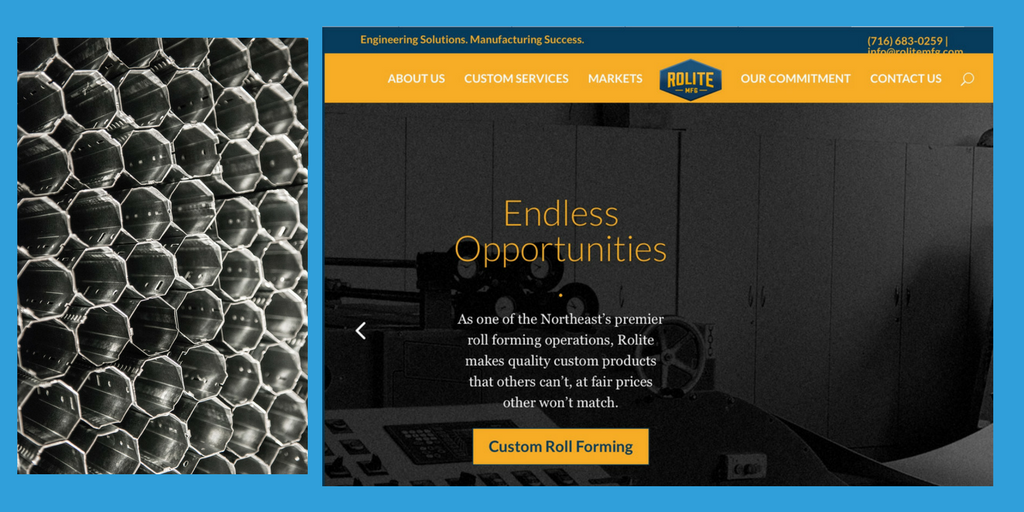
Recently I met with Ron Roberts, President of Rolite Manufacturing. Rolite is a roll forming manufacturer that Ron Roberts, Presidentproduces metal products of all shapes and sizes for large and small companies.

I toured their manufacturing facility and was amazed at how a compact roll of sheet metal can be stretched, cut, pounded, bent, stamped, shaped and sized into a variety of configurations.

Take a look at the video I uploaded to Youtube of all the different ways they can manufacture metal products.

Ron told me that every product they make must be made to have the right  "Form, Fit and Function."

  • Form: the look of the product projects the presentation the inventor intends;
  • Fit: the product meets all the requirements necessary; and
  • Function: the product must work the way it was intended.

Here are few questions and answers from my interview with him:

Can you help inventors make prototypes to use as a sales prop?

Many times we’re able to work with the inventor and help figure out the manufacturing details. We can gear their idea to existing equipment and help them lower startup costs. We help inventors in the process of manufacturing, we call it "engineering time" it's kind of like a research and development of the product without actually stepping on the toes of the inventor.

Our goal is to have cheaper startup costs for the inventor. Truthfully, independent, individual inventors are a small percentage of our business. Typically they don't have the financial wherewithal and know how to take it to the next level and we try to help them bridge the gap.

What are some of the biggest problems that inventors have that you are able to resolve?

We think outside the box, we have tooling and the presses that are capable of shaping and bending any piece of sheet metal into almost any position. We try to do it as simple as possible and we often design ways to make products inexpensively as possible. We also work with other companies to make a product, for example we've recently made a metal product which needed an attachment combination of a piece of cloth material and small brass fittings which were produced by outside sources and attached by our company.

What can you do to make a salable product better than a company located overseas?

Others need to find a manufacturer overseas in places like China because of cheap labor. We can do it better than an overseas company because we can:

  • Produce a high quality product (Assembly and manufacturing is done locally).
  • Avoid Secondary and third operators.
  • Provide a short response time to customers problems and queries.
  • Take care of quality issues as soon as they happen. If you're using somebody in China and there's a problem they would say “maybe we'll implement it on the next run” with us we fix it now.
  • We deliver on time because there is not an ocean we have to ship across.
  • If there's a legal problem outside the USA what legal recourse do you really have?

What considerations do you take into account before making a product?metal forming machine

"What are the fixed costs? How much is it to make? Can it be sold for a profit at every level? If not we can’t make it."

There are a five tiers of cost on any product:

  1. Manufacturer
  2. Distribution representative
  3. Wholesaler
  4. Retailer
  5. Final Customer cost

What steps do you take to preserve the rights of your clients?

"With us it is mum's the word, we do our best to keep everything confidential. We have an in-house Nondisclosure Agreement (NDA) which is fair and protects both the inventor and our company. If the inventor has their own NDA we will sign it if it is fair and reasonable."

Continue Reading...

What is Non-obvious and can be Patented?

What is patentable subject matter? Many people believe that they can patent anything. But the truth is there is only certain statutorily allowable subject matter that can be patented (35 USC 101).

Here's a list of the basic allowable subject matter:

  1. Process (Method of making infrared heaters which reduces costs by 25%) 
  2. Machine (Motorized device for clearing leaves out of a gutter without climbing)
  3. Article of manufacture (Pencil, chair)
  4. Composition of matter (Paint, drugs)
  5. Or any new and useful improvement thereof (Chair with a footrest)

If your invention falls into one of the above categories it must also be:

It doesn't take much to show that your idea is new because the slightest change will cause it to be original. And useful isn't really much of an obstacle, almost everything has some sort of use. There is a joke among chemical patent attorneys, "Any chemical composition has a use, it either kills grass or helps it grow!"

The hard thing to understand and to teach is what is non-obvious! I sometimes use the example of the invention of a table to get this idea across.table

Let's pretend you were around 10,000 years ago and you were the first person to invent a table. Your table has a square top, a bottom and four legs.

Now someone makes an improvement on the table and tries to get a patent. The improvement is that the top is circular in shape instead of a square. The argument by the patent office may be someone skilled in the art (a carpenter) would think it obvious that the top could be made in any shape or dimension and a round top would be rejected as an obvious improvement.

Even though the improvement of the first ever circular top is new, and it is useful it would be arguably not patentable if it was determined that it would be an obvious improvement for a carpenter to make a table top in any shape.parlor table

Now let's take a different approach. Let's say that the new inventor was the first to invent a table with pedestal legs connected to the center of the bottom. It could be argued that this way to connect the legs to the top is a non-obvious improvement and would be potentially patentable in the prehistoric patent office.

But obviousness can be established by combining or modifying the teachings of the prior art to produce the claimed invention where there is some teaching, suggestion, or motivation to do so. 

So if there was a chair in the prior art with a with similar legs like the pedestal legs of the invention table the examiner might combine the references of the square table with the chair and say it was obvious to come up with the new table.obvious example


I am not trying to replace the many legal treaties and case law on this the question of obviousness, not to mention the Manual of Patent Examining Procedure (MPEP) where there are many examples of what is non-obvious. I hope the simple logic of the table scenario is an easy way to generally grasp this concept.